Why we exist
Organizations are complex. When leadership, roles, or people systems lack clarity, progress slows and risk increases.
We exist to bring clarity where complexity gets in the way.
BlueChip People Strategies helps leaders understand what’s really happening by combining professional judgment with validated psychometrics and practical diagnostics. This evidence-informed approach supports better decisions, stronger leadership, and people systems that actually work in real environments.
When ongoing support is needed, this work can extend into fractional HR, providing senior-level guidance on a flexible basis, aligned to organizational needs and capacity.
Clear insight. Better decisions. Sustainable outcomes.
What we do
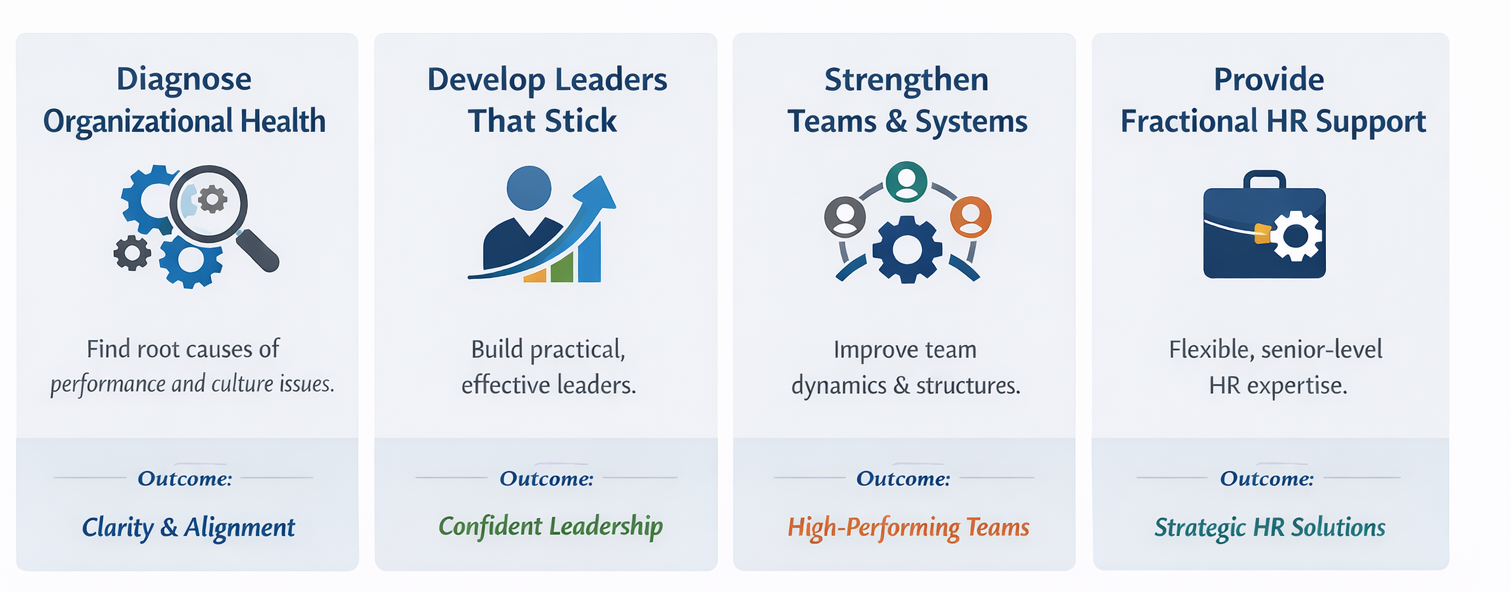
Make complex people issues clear by using validated psychometrics and focused diagnostics to inform sound decisions
Build leadership capability that shows up in day-to-day actions, not just frameworks or training sessions
Improve how teams function by strengthening trust, role clarity, and decision-making under real-world conditions
Provide flexible, senior-level HR support through fractional arrangements when organizations need experienced guidance without permanent headcount
Clear insight. Better decisions. Sustainable outcomes.

Who we are
Based out of Edmonton, Alberta, and drawing from expertise across North America, BlueChip People Strategies was founded on a simple observation: most workplace challenges are treated as people problems when they are actually system problems.
After years of working alongside leaders in complex, high-accountability environments, we saw the same pattern repeat itself. Teams were capable, leaders were committed, and yet organizations still experienced friction, fatigue, and stalled progress. The issue was rarely effort or intent. It was clarity.
BlueChip was created to bring a calmer, more practical way forward. Instead of jumping to solutions, labels, or blame, we focus on understanding how leadership, people, and work systems are actually operating. From there, better decisions become easier.
Our work sits at the intersection of organizational health, leadership development, and real-world operations. We partner with clients who want honest insight, thoughtful challenge, and sustainable improvement—not quick fixes.
The name BlueChip reflects our belief that strong people systems are long-term investments. When organizations take the time to understand what’s happening beneath the surface, they build resilience, trust, and performance that lasts.

Who we are not
We may not be the right fit for environments where accountability, role clarity, and ownership are not priorities, in environments where employees aren’t given ample opportunities to learn.
We are not well-suited for situations where growth and development are secondary to maintaining the status quo. We do our best work with organizations that are open to learning, change, and continuous improvement.
We may not align with workplaces that avoid honest, respectful conversations. Progress depends on the ability to talk openly about challenges, performance, and opportunities without blame or defensiveness.
We are not a match for those seeking solutions without engagement. Empowerment requires participation, trust, and a willingness to act on what is learned.
We may not be the right partner when decisions are driven primarily by avoiding discomfort rather than enabling people and teams to succeed.